
Meet Michael Schiller ‘95 (CCS Art): Investigative Journalist + National Emmy Award-winning Director and Producer
An impactful storyteller who dares to make a meaningful difference in the world
“Great art isn’t about art, it’s about ideas and vision, the times we live in, and the factors that shape it—so being in this small art program at CCS that was attached to a major university was a great combo.”
—Michael Schiller ‘95 (CCS Art)
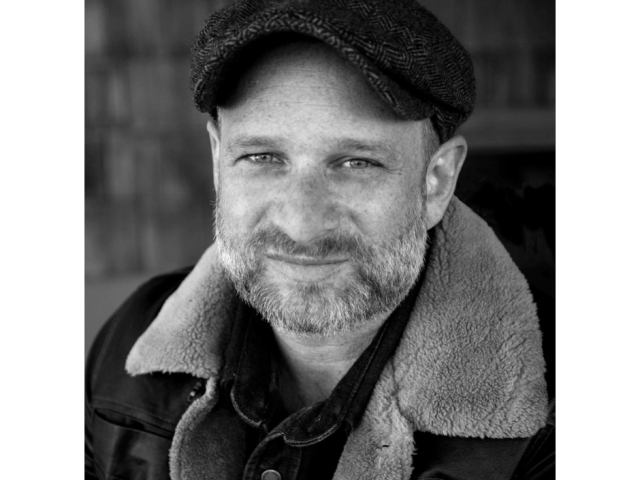
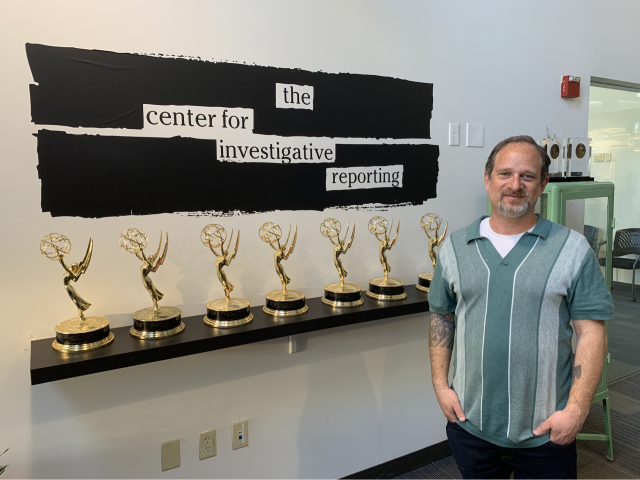
We love it when alumni stroll into the College of Creative Studies (CCS) for a visit and that is exactly what Michael Schiller ‘95 (CCS Art) did in Spring 2025. Coincidentally, Michael was in the CCS Art Gallery when he stumbled into CCS Dean Tim Sherwood who happened to drop by the gallery to see the latest senior art student solo exhibit. In a conversation later in the year, we learned Michael is a national Emmy Award-winning producer and director known for his multimedia work with The Center for Investigative Reporting (CIR), a nonprofit public interest journalism organization. His winning projects include, among others: "The Dead Unknown,” a video series about America's unidentified dead, earning a National News & Documentary Emmy; and “The Box,” an animated documentary about youth solitary confinement, nominated for a National News & Documentary Emmy and winning other significant festival awards. He was part of a team that developed Reveal, the PRX-distributed radio show and podcast, reaching hundreds of public radio stations and millions of listeners. He's a creative director who works in various mediums (radio, video, animation, and film) to tell investigative stories, focusing on impactful narratives for broadcast and digital platforms. His creativity has earned him numerous top journalism honors for impactful storytelling and diverse investigative journalism, including multiple Edward R. Murrow Awards and the Sigma Delta Chi Award.
In this self-reflective interview-style story, Michael reflects on his past and how it shaped his character, skills, and perspectives as a creator today. For Michael: “It’s been quite an extraordinary couple of decades since my time at CCS, filled with creative projects that have added up to a life I never dreamed possible as a 17-year-old freshman. I’m not talking about financial success. I’m talking about things you can’t buy. “
We found Michael’s story to be inspirational. We believe you will too.
CCS: How did you find out about the College? What was your major and graduation year?
Schiller: I saw a flyer on the wall of my high school guidance counselor’s office for a fellowship, sponsored by CCS. At the time I was very focused on making ceramic sculpture and I had just completed the California State Summer School for the Arts. My major was art with an emphasis on visual art. I graduated from CCS in 1995.
CCS: Why did you choose to come to CCS?
Schiller: I submitted a portfolio and was awarded the CCS work fellowship, which allowed me to choose a creative project to assist on, and get paid doing it. That was a factor. Also, I was drawn to the CCS philosophy, it just seemed like a unique place that was a good fit for me.
CCS: Any favorite aspects, professors, or experiences while at CCS? Does a memorable moment or two stand out from your time at CCS or UCSB? If so, please describe.
“One class that I’ll never forget at CCS was called “Physics for Poets.” The professor took us up in a small plane he piloted to demonstrate gravity.”
—Michael Schiller ‘95 (CCS Art)
Schiller: I loved having my own art studio, and the time and space to pursue my creative passions. There were so many talented people there, students and teachers, and the staff of the art program were all working artists—that was inspiring. I really enjoyed the flexibility of the program. In addition to the many art studio classes, I was also able to take fascinating classes outside of CCS, like Buddhist studies, the history of American social movements and labor, Black history, and other classes. Great art isn’t about art, it’s about ideas and vision, the times we live in, and the factors that shape it—so being in this small art program at CCS that was attached to a major university was a great combo. One class that I’ll never forget at CCS was called Physics for Poets. The professor took us up in a small plane he piloted to demonstrate gravity.
CCS: What three words best describe CCS?
Schiller: For Self-Motivated People. Is that 3 or 4 words? If there’s a strict rule on 3 words, I’ll go with: Self Motivated Education.
CCS: Has CCS impacted your life personally or professionally? If so, can you share?
“I found that every time I learned a new technology in pursuit of finishing one of my independent projects, I almost always found work using that skill…”
—Michael Schiller ‘95 (CCS Art)
CCS has had a lot of impact on my professional life. I got to experiment with so many different ways of making art and thinking about art. The really wide latitude to pursue my own projects and interests led me from a sort of traditional sculptural figurative practice to working with photography, film, and some of the digital technology that was starting to emerge. The diversity of different mediums and approach to studio work served me in the creative industries.
After I graduated, I moved to New York City and continued to pursue multimedia projects, including producing films, shooting photos, and freelance writing. I found that every time I learned a new technology in pursuit of finishing one of my independent projects, I almost always found work using that skill—whether it was software like Final Cut, Avid, or ProTools, or hardware like new digital cameras as digital video emerged as the new tech of the era. I found work in television, advertising, radio, and journalism, each time using skills I had developed in pursuit of a personal creative vision.
“At CCS I learned a methodology for staying focused on artistic goals, and being able to think outside of one medium to solve artistic problems. That method led me to my professional success.”
—Michael Schiller ‘95 (CCS Art)
At CCS I learned a methodology for staying focused on artistic goals, and being able to think outside of one medium to solve artistic problems. That method led me to my professional success. Even though I arrived as a sculptor at CCS, I had the freedom to also make films and video art. Now I’m an Emmy winning director and producer, and there is a through-line that connects back to the video work I was doing in college.
CCS: If you attended graduate school, where and what did you study as a graduate student? Did your CCS education help you as a graduate student?
Schiller: I attended the graduate university of the universe.
CCS: What have you been doing professionally post-CCS? Does it relate to what you studied at CCS? If so, how?
Schiller: I’ve worked in media professionally since the late 1990s as a writer, producer, director, photographer, editor, designer, and creative director for the music industry, magazines, television, advertising, radio, and journalism.
It’s been quite an extraordinary couple of decades since my time at CCS, filled with creative projects that have added up to a life never dreamed possible as a 17-year-old freshman. I’m not talking about financial success. I’m talking about things you can’t buy.
I’ve gotten to meet and work with rock stars and rappers from Lou Reed to Method Man. I worked on big ad campaigns like Dos Equis: “The Most Interesting Man in the World.” I directed a music video that aired on MTV. I helped start a few magazines and a radio show. I’ve won major film festival awards, and was flown to Japan to show my work in a museum show. I’ve been working at The Center for Investigative Reporting for the past 12 years where I’ve done the most meaningful work of my career. We've won dozens of broadcast journalism awards during my run there, but most importantly, we got some laws changed, held accountable people who did corrupt things, and had some bad places shut down.
I did not have any idea when I was at CCS that I would end up with a career in investigative journalism. Or that it would all connect back to what I did at CCS, but it does. It was the blend of being able to take courses across the university, but also having the time I needed to interpret what I learned through my creative work and be grounded in the daily studio art practice and building skills in different forms of story telling. But it all started with the CCS admissions people saying, we believe in you, you have talent, and your creativity has value, come to this program.
CCS: What advice would you give to current and future CCS students?
Schiller: Your success or failure is entirely up to you so stay very busy (but try to have fun with it, college should be fun or you're doing it wrong). Make the most of your time at CCS because, “don’t it always seem to go, that you don't know what you've got til it's gone?”
“Artificial Intelligence is already changing everything in its nascent state…But don’t fear it…Learn how to make it another tool in your tool box.”
—Michael Schiller ‘95 (CCS Art)
CCS: How do you see the direction of higher education in 3, 5, 10+ years unfolding? This is important as we plan for educating our future artists, experts, and leaders. Any thoughts/ideas?
Schiller: Artificial Intelligence is already changing everything in its nascent state. It poses a huge challenge for traditional illustrators and designers and filmmakers. But don’t fear it. Just like the telephone, or the internet, it’s here; it is definitely not going away. You must adapt to survive. Learn how to make it another tool in your tool box. Leverage it to solve your creative problems, and achieve your ambitions. Don't try to compete with it or use it to cheat, find a harmony with it where it can make you a better artist or scientist and creative.
CCS: Anything else you would like to share with the CCS community?
Schiller: CCS made college an experience where I could focus on what I loved doing, without being bogged down by general ed classes I had no interest in. Instead, I could put my energy into my art and creative pursuits, and experiment without limitation. Instead of staying up late studying for math and statistics tests, I was up late shooting rolls of 16mm Bolex film, throwing paint against a wall, sculpting and drawing, working out new ways to make art, trying new materials, and exploring new ideas. I don’t know how I would have finished college if I had to go the traditional route. It’s a special program, if you’re built for being independently motivated.
Are you a member of our community? Consider sending us a story or some thoughts about your experience with CCS. Or, drop by like Michael did. We’d love to connect!