
Meet Christine Nicole Spencer ’10 (CCS Biology)
Former student-athlete and cancer researcher working to expand access to lifesaving treatments
“I got the bug for research at CCS. That early, hands-on experience set the tone for everything that followed.”
—Christine Nicole Spencer ’10 (CCS Biology)
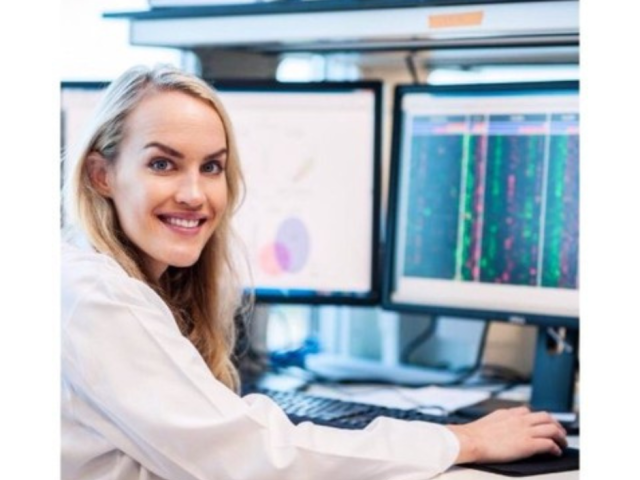
Before Christine Nicole Spencer ’10 (CCS Biology) was leading national research efforts for rare cancers or pushing the boundaries of cancer immunotherapy, she was a CCS biology student balancing basketball practice with long hours in the lab. “I got the bug for research at CCS,” she says. “That early, hands-on experience set the tone for everything that followed.”
After earning her M.P.H. and Ph.D. in epidemiology at the University of Texas School of Public Health with a focus on cancer immunology, Christine went on to lead data-driven research at the Parker Institute for Cancer Immunotherapy. Today, she works with the Rare Cancer Research Foundation, helping ensure that patients can contribute to and benefit from experimental therapies, no matter where they live or what diagnosis they face.
For Christine, success has never been about shortcuts. “Things don’t just happen—you have to make them happen,” she says. Whether it’s the struggle to solve a problem or the long road to a breakthrough, she values the process just as much as the outcome. It’s a mindset that took root at CCS and still guides her today. CCS sat down with Christine to learn more about her journey.
College of Creative Studies (CCS): Why did you choose to come to CCS?
Christine Spencer (CS): I chose to come to CCS mainly because I was really interested in pursuing research as an undergraduate. Also, I really liked that you were essentially paired with mentors who would help guide you through the process. Lastly, I liked that it was a smaller learning community which made the otherwise very large school feel a little more intimate and familiar.
CCS: Is there a favorite aspect, professor, or experience while at CCS? Does a memorable moment stand out?
“...[M]y favorite experience at CCS was just sitting in the offices of my advisors, Stu Feinstein and Armand Kuris…I also invited both of them to be guest “coaches” at our [UCSB} women’s basketball games—they weren’t really fans before having me, a basketball player, as a student—so it was fun to bring together two worlds that might not have crossed paths otherwise.”
—Christine Nicole Spencer ’10 (CCS Biology)
CS: I was an undergraduate research assistant in the Center for the Study of Age-Related Macular Degeneration (CSMD), and I am not sure I would have had that opportunity if research had not been such a central part of the CCS approach. That’s definitely where I caught the “research bug,” that is, getting hands-on experience in that environment was incredibly impactful. Still, I’d say my favorite experience at CCS was just sitting in the offices of my advisors, Stu Feinstein and Armand Kuris, and talking. Sure, we covered different directions I could take in my education at UC Santa Barbara and beyond, but what really stuck with me was just learning about their lives and experiences. I also invited both of them to be guest “coaches” at our women’s basketball games—they weren’t really fans before having me, a basketball player, as a student—so it was fun to bring together two worlds that might not have crossed paths otherwise. I keep in close touch with Armand and try to meet up with him in person during my yearly visits back to UCSB with or without my young kids.
CCS: Where did you attend graduate school, and what did you study? How did CCS play a role in your post-undergrad journey?
CS: CCS gave me a deep passion for research, and it really prepared me to hit the ground running at the University of Texas School of Public Health where I earned both my M.P.H. and Ph.D. Because I already understood how a lab worked, I wasn’t starting from scratch; I had the foundation to thrive.
“I knew I wanted to study cancer patients.”
—Christine Nicole Spencer ’10 (CCS Biology)
My focus was epidemiology with an emphasis on cancer immunology. I chose that program largely because it’s literally next door to the MD Anderson Cancer Center, the largest cancer center in the U.S. and home to more clinical trials than anywhere else in the world. I knew I wanted to study cancer patients, and being that close to MD Anderson opened up a lot of opportunities. Grad school was an incredibly productive and exciting time. I became really interested in a relatively new approach to treating cancer using a patient’s own immune system—what we now call cancer immunotherapy. I joined a lab that focused on patient data in the context of these therapies, just as they were beginning to show promise in treating melanoma. It was a unique window—these were powerful, groundbreaking drugs, but no one really understood why they worked well for some patients and not for others.
During my Ph.D., I worked in the lab of Dr. Jennifer Wargo, a surgeon-scientist at MD Anderson. Our team and collaborators made a number of key discoveries, including one that became a major focus of my dissertation: the role of the gut microbiome in cancer immunotherapy outcomes. We found that not only were certain microbiome characteristics linked to better outcomes, but that diet—especially fiber intake—could also influence those outcomes by shaping the microbiome. These findings, published in Science in 2017 and 2021, helped kick off several new clinical trials exploring how to manipulate the microbiome with diet or “prescription probiotics” to improve response to cancer immunotherapy.
Looking back, being a student-athlete at UCSB also played a role in my success.
—Christine Nicole Spencer ’10 (CCS Biology)
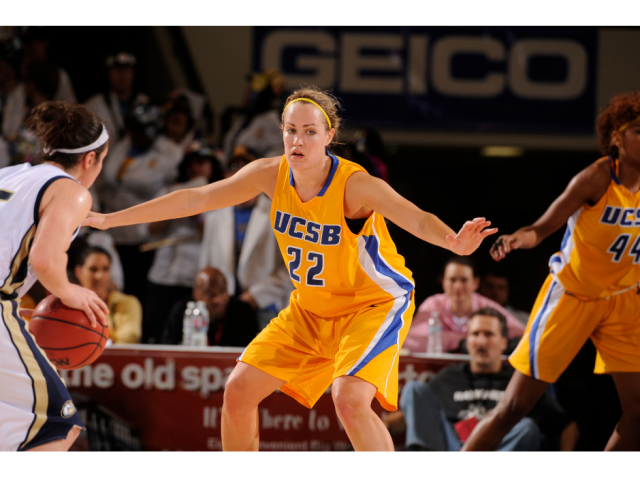
Looking back, being a student-athlete at UCSB also played a role in my success. It taught me how to work hard and manage my time effectively, both of which were crucial during my Ph.D. I would say the combination of CCS and athletics set me up really well for that chapter of my life.
CS: I’d really encourage students to seek out and take full advantage of the mentorship CCS offers. At a school the size of UCSB, it’s rare to have that kind of access to faculty. So many of the professors are incredible people—both inside and outside the classroom—and they genuinely care about your growth.
I’d also say: absolutely enjoy the natural beauty of Santa Barbara—it’s a special place. But don’t forget to put in the work to get where you want to go. For most people, things don’t just happen—you have to make them happen.
CCS: How do you see higher education evolving in the next 3, 5, or 10+ years?
CS: I might be biased since I work in a field where new technology constantly reshapes the landscape, but I do think AI is going to change higher education, too. My hope is that we don’t lose sight of the fundamentals. AI can provide answers quickly, but it doesn’t necessarily promote real learning. I really value the journey of figuring things out—that process of struggling through a problem is where so much growth happens. I hope educators can find a way to integrate AI in a way that enhances learning without replacing those important parts of the experience.
The College thanks Christine for sharing her story with the CCS community and applauds her dedication to the betterment of the human condition and on equity in research.